
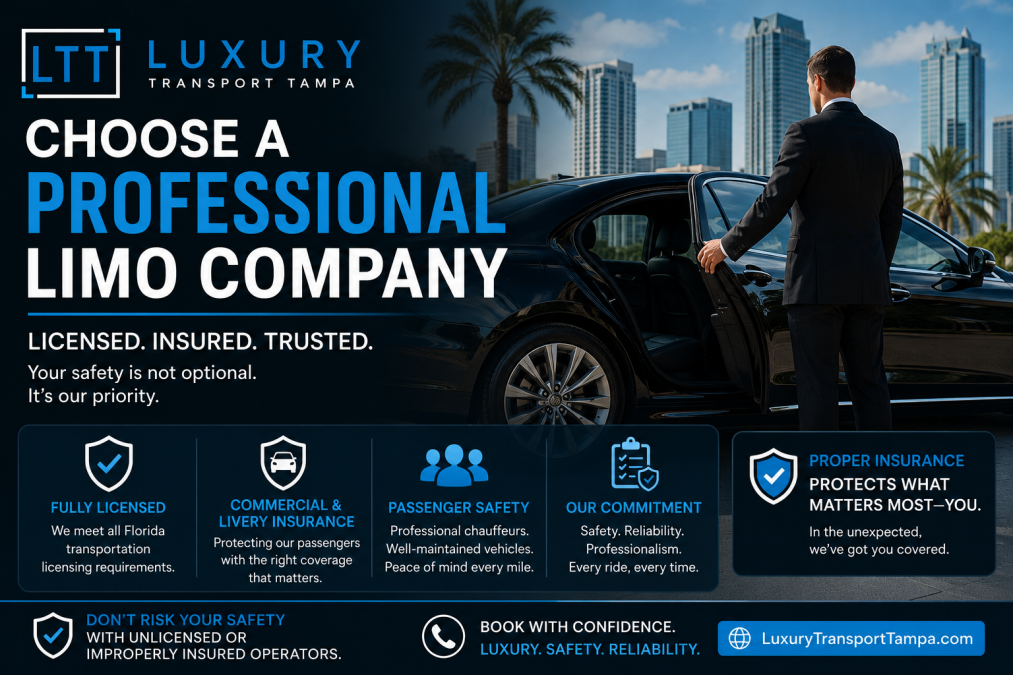
Build Confidence When Choosing a Professional Limo Company With Proper Florida Licensing and Insurance Requirements Matters
Luxury transportation has become increasingly popular throughout Florida. Whether clients need airport transportation, executive transportation, wedding transportation, corporate travel, cruise port transfers, special event services, or long-distance black car service, expectations go beyond simply reaching a destination. Passengers expect comfort, professionalism, reliability, and most importantly, safety.
However, one critical factor often gets overlooked when booking transportation services: whether the company actually operates as a legitimate and properly insured professional limo company.
Many customers focus entirely on price, vehicle appearance, online photos, or convenience while failing to ask important questions regarding insurance coverage, licensing, and regulatory compliance. Unfortunately, choosing the wrong provider can expose passengers to substantial risks.
Not every company advertising luxury transportation operates legally or maintains proper protection for its clients.
In Florida, professional transportation companies are expected to meet specific standards involving licensing, commercial coverage, and operating requirements. These requirements exist for a reason: protecting passengers in the event of accidents, liability claims, injuries, or unexpected situations.
Understanding the differences between personal insurance policies, commercial insurance, and livery insurance can help customers make smarter decisions while protecting themselves and their families.
This guide explains:
- Why proper licensing matters
- Florida transportation requirements
- What commercial insurance is
- What livery insurance covers
- Risks of uninsured operators
- Questions passengers should ask before booking
- Why choosing a professional limo company protects your investment and safety

Why Anyone Can Appear Professional Online
Today’s marketplace makes it easy for nearly anyone to create a business presence.
Someone can quickly:
- Build a website
- Create social media accounts
- Advertise luxury vehicles
- Purchase online leads
- Offer lower prices
To consumers, these companies may appear identical to established transportation providers.
But appearance does not necessarily equal legitimacy.
The difference often exists behind the scenes in areas such as:
- Insurance coverage
- Business licensing
- Chauffeur screening
- vehicle inspections
- operating authority
- safety policies
- maintenance programs
Professional transportation companies invest heavily in these areas because passenger safety depends on them. Maintaining proper licensing, commercial and livery insurance, routine vehicle maintenance, driver training, and operational standards helps create a safer travel experience while reducing risks. These investments demonstrate a commitment to professionalism, reliability, and protecting passengers during every trip.
Why Florida Requires Transportation Standards
Florida remains one of the busiest tourism and transportation markets in the United States.
Millions of travelers use transportation services annually for:
- Tampa International Airport transfers
- Orlando travel
- Miami transportation
- cruise terminals
- conventions
- weddings
- sporting events
- corporate meetings
Because passengers place trust in transportation providers, regulations exist to establish minimum safety standards.
These standards generally include:
- commercial vehicle registration
- business licensing
- insurance requirements
- driver qualifications
- operating compliance
- vehicle maintenance standards
These requirements help reduce risks while protecting passengers by establishing standards designed to promote safety, accountability, and reliable transportation services. Proper licensing, insurance requirements, vehicle inspections, and operational guidelines help minimize potential hazards while ensuring companies maintain practices that prioritize passenger well-being and provide greater protection in unexpected situations.
Understanding Commercial Insurance
One of the biggest misconceptions among customers involves insurance.
Many people assume:
“If a driver has insurance, we’re protected.”
Unfortunately, that assumption can become extremely costly.
Personal auto insurance and commercial transportation insurance are entirely different.
Commercial insurance is specifically designed for businesses operating vehicles for income-producing purposes.
Professional transportation companies generally require policies designed for:
- business use
- passenger transportation
- liability exposure
- vehicle damage
- bodily injury
- property damage
- legal protection
Commercial policies often provide significantly higher coverage limits than personal auto insurance.
Why Personal Insurance Usually Isn’t Enough
Personal automobile policies are generally intended for:
- commuting
- family use
- personal errands
- recreational driving
Many personal policies specifically exclude:
- transporting passengers for compensation
- business use
- commercial transportation activity
Imagine a scenario:
A passenger hires what appears to be a legitimate luxury transportation service.
During travel, another vehicle causes an accident resulting in injuries.
During investigation, the insurance company discovers the driver was transporting passengers for payment under a personal policy.
The insurer could potentially deny portions of the claim because the vehicle was being used outside policy guidelines.
Passengers could suddenly find themselves facing unexpected complications.
What Is Livery Insurance?
Livery insurance is specialized commercial coverage intended specifically for businesses transporting passengers for compensation.
Examples include:
- limousine services
- black car services
- chauffeur services
- executive transportation
- airport transportation
- shuttle services
Livery coverage often provides protection for:
Passenger injuries
If passengers sustain injuries during an accident, coverage may help address:
- medical expenses
- liability claims
- legal costs
Property damage
Coverage may assist with damages involving:
- other vehicles
- structures
- third-party property
Liability protection
Transportation companies face significant liability exposure due to carrying passengers.
Livery insurance helps provide appropriate protection levels.
Uninsured and underinsured motorists
Coverage may help if another driver lacks sufficient insurance.
Why Livery Insurance Matters for Passengers
Many customers mistakenly think insurance only protects the transportation company.
In reality, passengers often receive the greatest benefit.
Passengers trust transportation providers with:
- family members
- business executives
- children
- wedding parties
- clients
- friends
If an accident occurs, adequate insurance becomes extremely important.
Without proper protection, passengers may experience:
- claim complications
- delays
- financial uncertainty
- legal issues
- reduced recovery options
Professional companies understand these risks.
Risks of Choosing an Unlicensed or Improperly Insured Company
Price shopping often causes consumers to select the cheapest available transportation option.
Lower prices sometimes exist because companies avoid costs associated with:
- licensing
- insurance
- maintenance
- compliance requirements
Potential risks include:
Increased liability exposure
Improper insurance coverage may create serious claim issues in the event of an accident. If a transportation provider lacks proper commercial or livery insurance, passengers could experience delays, denied claims, unexpected financial complications, or reduced protection. Adequate coverage helps ensure passengers and companies are protected when unforeseen situations occur.
Inadequate passenger protection
Passengers could encounter coverage limitations that affect their protection during an accident or unexpected incident. Insufficient insurance coverage may result in reduced claim benefits, delays in processing, out-of-pocket expenses, or challenges receiving compensation for injuries and damages. Proper commercial and livery insurance helps ensure passengers receive the protection and financial security they expect.
Safety concerns
Companies cutting corners financially may also cut corners operationally, potentially impacting the overall quality and safety of their services. Reducing expenses on vehicle maintenance, driver training, licensing, inspections, or insurance requirements can increase risks for passengers and create avoidable issues that may affect reliability, safety standards, and the overall customer experience.
Vehicle maintenance issues
Professional fleets typically maintain regular inspection and service schedules to help ensure vehicles operate safely, efficiently, and reliably. Routine maintenance, preventative repairs, and scheduled inspections can identify potential issues before they become larger problems, reducing risks for passengers while helping maintain higher standards for safety, performance, and overall transportation quality.
Driver screening concerns
Legitimate companies often conduct:
- background checks
- motor vehicle reviews
- training procedures
Questions Passengers Should Ask Before Booking Transportation
Consumers should never hesitate to ask questions.
Important questions include:
Are you fully licensed?
Do you carry commercial insurance?
Do you carry livery insurance?
Are your chauffeurs professionally screened?
Are vehicles regularly inspected?
Are drivers trained for passenger transportation?
Professional companies should welcome these questions.
Transparency builds trust.
How Professional Chauffeur Services Differ From Ride Apps
Many customers compare luxury transportation services to rideshare platforms.
While both involve transportation, operational structures may differ significantly.
Professional chauffeur companies often emphasize:
- scheduled service
- dedicated customer support
- commercial insurance
- luxury fleet maintenance
- professionally trained drivers
- business accountability
Passengers seeking dependable transportation frequently value these differences.
Why Businesses Should Pay Attention
Corporate clients often transport:
- executives
- VIP guests
- investors
- clients
- employees
An accident involving an improperly insured provider can create:
- reputational risks
- liability concerns
- legal exposure
Businesses frequently choose established transportation partners to reduce these risks.
Passenger Safety Should Never Be Negotiable
Luxury transportation should provide more than appearance and convenience.
True professionalism includes:
- proper insurance
- licensing
- maintenance
- driver screening
- accountability
The least expensive option can sometimes become the most expensive mistake.
When passengers enter a vehicle, they deserve confidence that the company has invested in protecting them.
Final Thoughts: Choose a Professional Limo Company That Protects Passengers
Choosing a professional limo company involves more than selecting an attractive vehicle or comparing prices online.
Passengers should prioritize:
- proper Florida licensing
- commercial insurance
- livery insurance
- professional standards
- safety procedures
- qualified chauffeurs
Commercial and livery insurance exist for a reason: protecting passengers when unexpected situations occur.
Luxury transportation should deliver peace of mind in addition to comfort.
The right company protects both your experience and your safety. The expression of ” you get what you pay for” applies heavily in this area.
Luxury Transport Tampa
At Luxury Transport Tampa, passenger safety and professionalism remain at the center of everything we do. We maintain high operational standards because our clients trust us with business travel, airport transfers, executive transportation, special events, and important moments.
Our commitment goes beyond luxury vehicles—we prioritize safety, compliance, professionalism, and peace of mind every mile of the journey.
Schedule your next ride with confidence and experience the difference a professional transportation company can make.

Leave a Reply